Why Your Offer May Be Creating Frustration Instead of Movement
You can build an offer with good intentions, real expertise, and a genuine desire to help — and still accidentally create an experience that frustrates the people you wanted to support.
Not because your audience is lazy.
Not because your offer is worthless.
And not because transformation should always be easy.
Sometimes it happens because both the creator and the buyer get caught in the same pattern: they keep moving forward with a path that is not creating enough traction, simply because so much has already been invested in it.
I call this the Persistent Decision-Making Trap.
You can see it everywhere in online business.
A coach creates a big course with modules, workbooks, templates, spreadsheets, bonus trainings, and lots of steps. The students start saying things like:
“This is a lot.”
“I’m overwhelmed.”
“I’m behind.”
“I’m frustrated.”
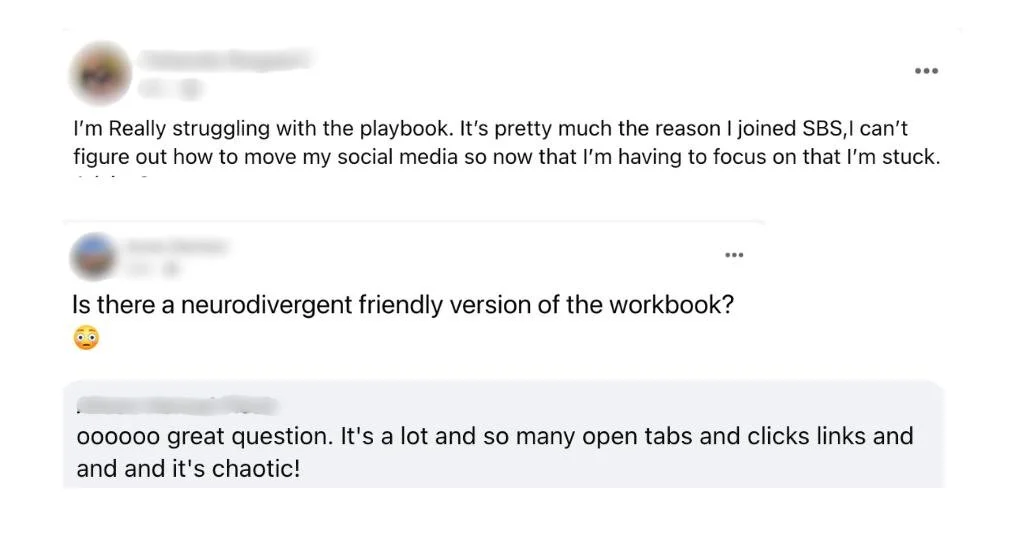
But instead of stepping back and asking whether the offer itself has too much drag built into it, the response often becomes:
“Keep going.”
“Push through.”
“Do the work.”
“Trust the process.”
Sometimes that advice is right.
But sometimes the real problem is not commitment.
Sometimes the real problem is design.
There is real psychology behind this.
Research on escalation of commitment shows that people often keep investing in a course of action even after negative results, especially when they feel personally responsible for the original decision. In plain English, when something is not going well, people do not always step back and rethink it. Very often, they double down.
That connects closely to the sunk cost effect — the tendency to keep going because time, money, effort, or hope have already been invested.
Then there is effort justification, which may be the most relatable part of all. In a classic 1959 study, researchers had people go through either a severe, mild, or no initiation before joining a discussion group. Everyone then listened to the same intentionally dull discussion. The people who went through the more unpleasant initiation rated the group more positively. When people work harder or endure more discomfort, they often feel pressure to believe the thing was worth it.
And research on feedback adds one more important layer: negative feedback does not always trigger strategy change. It often increases effort instead. When people feel behind, their first response is often not, “Maybe this method is wrong.” It is, “I need to try harder.”
Put all of that together, and you get a trap.
The buyer thinks:
I already paid for this.
I’ve already put so much into this.
I should keep going.
The creator thinks:
They just need more support.
They just need more accountability.
They just need help getting through it.
Meanwhile, the actual question may be getting missed:
Is this offer helping people move, or is it mainly teaching them how to endure friction?
That distinction matters.
Because challenge and drag are not the same thing.
A good offer can absolutely be challenging. It can stretch people, ask them to think, and require real action. But helpful challenge creates movement. It gives people a sense that their effort is leading somewhere.
Drag feels different.
Drag feels heavy.
Confusing.
Cluttered.
Hard to navigate.
Full of work, but light on traction.

Image from pexels.com
And this is where I think a lot of thoughtful business owners get stuck.
They were trying to help.
They added more because they thought more would feel valuable.
More guidance.
More templates.
More worksheets.
More bonuses.
More support.
But sometimes more support is not solving the problem.
Sometimes it’s modifying a system that needs simplification.
Because it means frustration inside an offer is not always a sign that your audience is uncommitted. And it is not always a sign that you have failed.
It may simply mean the path needs improvement.
If your offer feels heavier than it should, here are a few places to start:
Look for repeated confusion. If people keep asking where to begin, what matters most, or what to do next, the path may not be clear enough.
Look for work without momentum. If people are completing a lot but not feeling movement, the offer may have too much activity and not enough traction.
Look for support that only keeps the system afloat. If your audience constantly needs encouragement just to continue, it is worth asking whether the design is doing too much of the exhausting.
Look for places where fewer decisions could create more progress. Often the fastest improvement is not adding something new. It is removing options, steps, or mental load.

image from pexels.com
This is one reason I care so much about smaller, more useful tools.
Sometimes people do not need more content to consume.
They need something that helps them move.
Something they can interact with.
Something that shortens the distance between effort and evidence of progress.
That is why I think small tools can be so powerful. A useful tool can create clarity, a decision, a next step, or a small win much faster than a pile of content can.
And when your audience feels movement, everything changes.
They trust more.
They understand faster.
They come back.
They stop feeling like they are trudging through homework and start feeling like something is actually happening.
That is the goal.
Not to make people prove they want the result badly enough.
But to help them move.